
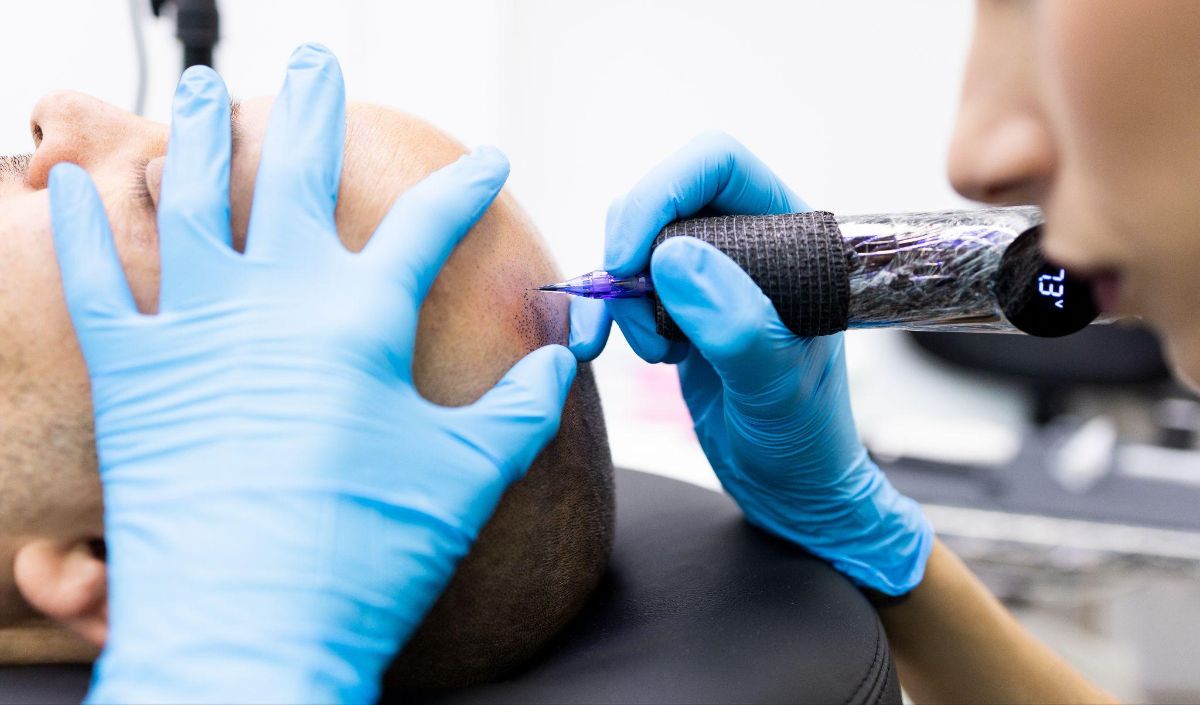
Scalp micropigmentation is only as good as the person holding the needle. The same treatment can look like a natural shaved head in one artist’s hands and like a flat, painted-on patch in another’s. That’s why reading scalp micropigmentation reviews and vetting your artist is the most important step in the whole process. This guide walks through the credentials, permits, portfolio details, and review patterns that separate a skilled SMP artist from someone who just added it to their menu.
Why the Artist Matters More Than the Studio
SMP is a specialized skill, not just a tattoo variation. A good SMP artist controls dot size, depth, spacing, and shade so the result looks like real follicles up close and from across the room. Those details are hard to correct once pigment is in the skin.
General tattoo experience doesn’t automatically translate. Scalp skin behaves differently, needle depth is shallower, and the goal is subtle realism, not bold lines. The most common SMP problems — dots that blur together, a blue or green tint, or a hairline that looks too sharp for the client’s age — usually trace back to technique. Our post on questions to ask your SMP artist is a good starting checklist.
Credentials and Training to Look For
There’s no single national SMP license, so you’ll need to ask directly about training. Look for an artist who has dedicated SMP training, years of scalp-specific work, and a clear understanding of different hair loss conditions — not just a weekend course.
Questions worth asking:
- How long have you specialized in scalp micropigmentation?
- Where and how did you train, and for how long?
- How many SMP clients have you treated?
- Have you worked on scars, alopecia, women’s thinning, or post-transplant density?
- What pigment do you use, and why?
At ScalpMasters, the technicians completed rigorous, lengthy apprenticeships, and founder Travis Rigsbee was one of the first practitioners of SMP. You can meet the team on the About Us page.
Check Permits and Health Standards
SMP involves needles and pigment, so the studio should meet local health rules. In the Reno area, businesses that do tattooing and permanent cosmetic work need a health permit, and it’s fair to ask to see it.
Northern Nevada Public Health requires a health permit for anyone performing invasive body decoration, which includes tattooing and permanent makeup, and inspects permitted locations at least once a year. Wherever you live, check your local health department’s rules and look for a clean studio, single-use needles, and gloves changed between steps.
How to Read Scalp Micropigmentation Reviews
Scalp micropigmentation reviews are most useful when they describe specific details: how natural the result looks, how the artist communicated, how sessions felt, and whether there was follow-up afterward. Vague five-star ratings with no detail tell you much less.
When you read reviews, look for:
- Mentions of specific artists. Repeated praise for the same artist by name is a strong signal.
- Comments on realism. Phrases like “looks so realistic” or “nobody can tell” matter more than “great service.”
- Follow-up and aftercare. Good artists check in between sessions.
- How problems were handled. One critical review handled well can say more than ten generic positives.
For example, Reno clients have written that Sean “is very knowledgeable and supportive, and was attentive and followed up after” (Bo Ahlgren) and that the studio is “nice clean place professionally done and light handed” (YirgaHaben).
Evaluate the Portfolio Like a Pro
A strong portfolio shows a wide range of clients and outcomes, not just a handful of dramatic before-and-afters. Look for close-up photos, different skin tones, different stages of hair loss, and healed results — not only fresh work right after a session.
Signs of quality in photos:
- Individual dots are visible up close and don’t blur together.
- The hairline is soft and irregular, like a natural one.
- The shade matches the client’s skin and any remaining hair.
- Healed photos look as good as fresh ones.
ScalpMasters shares real client results with no actors or stock photos in its results gallery.
Red Flags to Watch For
Be cautious of any artist who pushes you to book on the spot, can’t show healed results, quotes a price without seeing your scalp, or promises a hairline that doesn’t fit your age. Unusually low prices can also mean less experience or lower-quality pigment.
Other warning signs include no consultation before the first session, no aftercare instructions, and reluctance to answer questions about training or permits. Fixing poor SMP is harder and often more expensive than getting it right the first time.
What a Good Consultation Looks Like
A good consultation is a conversation, not a sales pitch. Your artist should examine your scalp, ask about your hair loss history and goals, sketch or discuss a hairline that suits your face, and explain how many sessions you’re likely to need and why.
You should leave with a clear plan, a real quote, and no pressure to commit that day. If something feels rushed, keep looking.
How to Get Started With ScalpMasters
ScalpMasters has helped more than 1,100 clients since 2018, and every client starts with a free, no-pressure assessment with an expert who understands hair loss. You’ll see real results, ask any questions you have, and get a personalized plan and quote. Book your free consultation to meet the team.
Key Takeaways
- The artist’s skill is the biggest factor in how natural your SMP looks.
- Ask about SMP-specific training, years of experience, and the types of hair loss they’ve treated.
- Confirm the studio holds the required local health permit; in the Reno area, that’s through Northern Nevada Public Health.
- The most useful scalp micropigmentation reviews mention specific artists, realism, and follow-up.
- Look for healed results across many clients, and walk away from high-pressure sales tactics.
FAQ
Is a tattoo artist qualified to do SMP? Not automatically. SMP requires different needle depth, dot control, and shading than traditional tattooing, so look for dedicated scalp micropigmentation training and experience.
How many reviews should an SMP artist have? There’s no magic number, but look for consistent, detailed reviews over time, ideally mentioning the artist by name and describing natural-looking results.
What should I bring to an SMP consultation? Bring questions about training and experience, photos of looks you like, and any history of hair loss treatments or transplants.
Can bad SMP be fixed? Often, yes, but correction is more complex than getting it right the first time. Choosing an experienced artist upfront saves time, money, and frustration.
