
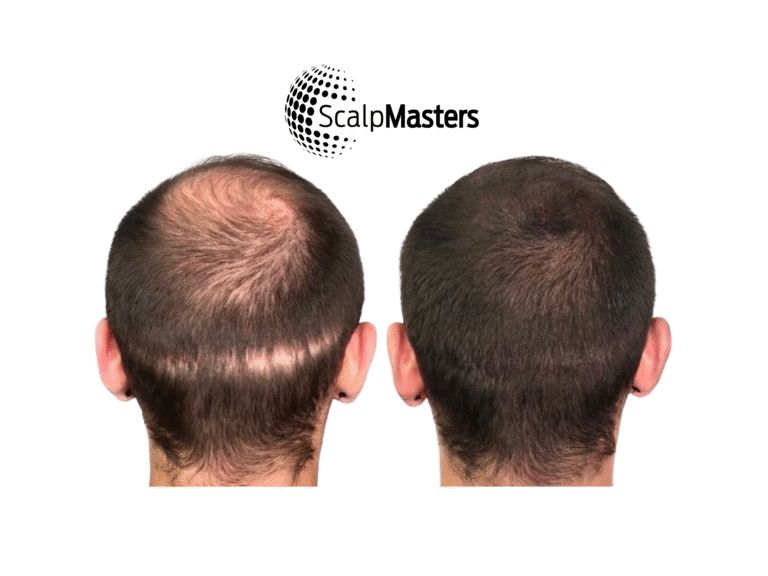
If you’re tired of daily foams, pills, and products, you’re probably searching for a permanent hair loss solution — something you do once (or close to once) and stop thinking about. The honest answer is that “permanent” means different things for different treatments. Some last for years with light maintenance, some depend on how your hair loss progresses, and some only work as long as you keep using them. This guide compares the three options ScalpMasters works with every day — scalp micropigmentation, ARC+ Therapy, and hair transplants — so you know what each can realistically deliver.
Why Most Hair Loss Treatments Aren’t Permanent
Most popular hair loss treatments stop working when you stop using them. Minoxidil and finasteride can slow loss and sometimes regrow hair, but they’re ongoing commitments, not one-time fixes. That’s the main reason people start looking for longer-lasting options.
Minoxidil has to be used every day to keep its results, and hair loss resumes after someone stops taking finasteride. Laser caps and combs also require many sessions over months. These treatments have a place, especially early on, but none of them is a “do it and done” answer.
Scalp Micropigmentation: The Closest Thing to Set-and-Forget
Scalp micropigmentation (SMP) is a non-invasive cosmetic treatment that places tiny deposits of pigment in the scalp to mimic hair follicles. It doesn’t regrow hair, but it permanently changes how your scalp looks — creating a buzz-cut look or making thinning areas appear fuller — with results you can see right away.
At ScalpMasters, SMP uses organic, scalp-specific pigment, and most clients complete treatment in two to four sessions spaced a few weeks apart. When it’s done by an experienced artist and cared for properly, SMP can last for many years. Like any micropigmentation, it softens gradually over time, so most clients plan on an occasional touch-up rather than a full redo.
What makes SMP a strong long-term solution:
- It isn’t affected by further hair loss — the pigment stays where it’s placed.
- There’s no daily routine, product, or medication involved.
- It works for androgenetic alopecia, alopecia areata, traction alopecia, scars, and post-transplant density.
If you want to understand the timeline in more detail, our guide on how long scalp micropigmentation lasts covers fading and touch-ups.
ARC+ Therapy: A Regenerative Option for Active Follicles
ARC+ Therapy is a regenerative treatment that uses a patient’s own processed cells, injected into the scalp, to support follicles that are thinning but still alive. It’s designed as a single session, and it’s best suited to people who still have active follicles rather than fully bald areas.
ARC+ Therapy was developed by ScalpMasters founder Travis Rigsbee. In the study ScalpMasters cites, nine patients with severe pattern hair loss saw hair counts rise by an average of 116% at six months on the treated side. That’s a promising result, but it’s also a small study, and outcomes vary from person to person.
ScalpMasters is upfront that its regenerative therapies are not currently FDA-approved and are considered investigational. ARC+ also doesn’t stop the underlying cause of pattern hair loss, so it’s best thought of as a long-lasting boost rather than a guaranteed lifetime result. Many clients pair it with SMP for the most complete look.
Hair Transplants: Permanent Grafts, With a Catch
Hair transplants move follicles from the back and sides of the scalp, where hair is usually resistant to pattern loss, to thinning areas. The transplanted hair is generally permanent, but the native hair around it can keep thinning, which is why some people need more than one procedure.
Transplants are surgical, so they involve recovery time, a higher upfront cost, and a limited donor supply. ScalpMasters partners with transplant surgeons for FUE procedures and uses ARC+ afterward to support healing. Clients also often add SMP after a transplant to fill in density or hide donor-area scarring. Our comparison of scalp micropigmentation vs. a hair transplant goes deeper on the trade-offs.
Side-by-Side: Which Permanent Hair Loss Solution Fits You?
The best permanent hair loss solution depends on how much active hair you have, whether you want regrowth or the look of density, and how you feel about surgery. This table summarizes the main differences.
| SMP | ARC+ Therapy | Hair Transplant | |
|---|---|---|---|
| What it does | Creates the look of hair with pigment | Supports thinning but living follicles | Moves follicles to thinning areas |
| Regrows hair? | No | Aims to | Yes (transplanted hair) |
| Surgery? | No | No | Yes |
| Sessions | 2–4 | 1 | Often 1–2+ |
| Results visible | Immediately | Over months | Over many months |
| Works on fully bald areas? | Yes | No | Depends on donor supply |
| Ongoing upkeep | Occasional touch-ups | Varies by person | Native hair may keep thinning |
How to Choose Your Long-Term Plan
Start with an honest look at your scalp. If you’re fully bald or want a clean, buzz-cut look, SMP is usually the most dependable choice. If you still have active follicles, ARC+ may help you keep and strengthen what’s there. If you want real hair in a specific area and have enough donor hair, a transplant may make sense.
For many people, the answer is a combination. A free assessment is the fastest way to find out which mix fits your hair loss pattern, budget, and goals.
How to Get Started
ScalpMasters has been helping clients with hair loss since 2018, and every plan starts with a free, no-pressure scalp assessment — a conversation with an expert, not a sales pitch. You’ll get a personalized recommendation and a real price quote, and financing through PatientFi is available if you’d like to spread out the cost. Schedule your free assessment to find the long-term solution that fits you.
Key Takeaways
- Minoxidil and finasteride only work while you keep using them, so they aren’t permanent fixes.
- SMP is the most “set-and-forget” option: no surgery, immediate results, and occasional touch-ups over the years.
- ARC+ Therapy is a single-session regenerative treatment for thinning but active follicles; it’s investigational and results vary.
- Transplanted hair is generally permanent, but surrounding hair can keep thinning.
- Many clients get the best result by combining treatments, starting with a free assessment.
FAQ
Is there a truly permanent cure for hair loss? Not for pattern hair loss itself. Treatments like SMP and transplants offer long-lasting results, but the underlying cause can continue, so most long-term plans include some maintenance.
How long does scalp micropigmentation last? With proper care and an experienced artist, SMP can last for many years. It softens gradually, so most clients schedule an occasional touch-up.
Can I combine SMP and ARC+ Therapy? Yes. ARC+ supports active follicles while SMP adds the look of density, and many ScalpMasters clients use both.
Do I need to stop minoxidil before SMP? Not necessarily. Talk through your current routine during your free assessment so your artist can plan around it.
